Author Archives: Tracy Weber

Meditation: Work or Play?

This week’s blog entry was written by guest author Roy Holman. Roy is a graduate of Whole Life Yoga’s teacher training program. He can be contacted at ho**********@***il.com and at http://holmanhealthconnections.com.

People come to my meditation classes hoping to find peace and calm. Sometimes the first thing they notice is how not peaceful and calm they are! Perhaps even long ignored or buried emotions like fear and anger surface, and they run from their meditation practice shouting, “I thought this would be fun!”

So what is meditation?  Is it blissful sitting and finding our center? Or is it hard work, using effort to struggle through our patterns? Perhaps both. Effortless Effort.

It takes courage and effort to break patterns, see our stuff, face our feelings. It takes some practice and techniques and teachings to learn how to prepare the body, sit still, and calm the mind to some degree. This is the yang or masculine side of the practice. One cannot do yoga without getting on the mat.  One cannot meditate without sitting down and finding a way to move beyond thinking and doing.

We can use whatever “techniques” or effort we can to do this.  Conscious regulation of the breath (called pranayama in yoga terms) is one of my favorite ways to still the mind. We can simply follow the breath or deepen the breath, and the breath often leads us deeper into our meditation.

Some of us like to use a mantra, such as “I am love.” This is an excellent way to still the mind and move out of the thinking and planning. We can also feel our feelings.  Bring our attention down from our thinking mind and down into the body and just feel what is going on.

Ultimately though, our meditation practice is more being than doing, more allowing than controlling, observing than changing. Our world has had the masculine do-orientation turned up for eons, and it is time to move more into the feminine effortlessness of being. This is more about heart than head, feeling rather than thinking. This is where we need to focus not only on our meditation cushion and yoga mat, but in our world.

Again, use whatever technique to get there, but know you are already always “there.”  Truth is here, now. We are not trying to get anywhere. We follow the Tao (truth), the divine flow, moving with rather than against the currents. We don’t change but observe thoughts.  We don’t control or plan where we are going. We don’t fight against life but let it teach us–and it always will.

Meditation is more about being, essence, and presence.  We are coming out of such a painful time on planet earth.  We are afraid, our energy systems are on high alert, we see enemies everywhere, and our self esteem is so low we feel we need to earn a date with the Divine. But the Divine, or Truth, or God, or Joy, or the Sacred–choose your word–is always closer than close.  And grace is always pouring in, if we can only learn to let go and receive it.

I use the words, “drop in,” when I finish my breath, prayer, and gratitude parts of my meditation. This reminds me that the “effort” part of the meditation is over.  It does not mean that I try to change or eliminate thoughts, but I watch and let go of control. Then I sometimes drop in to a sacred space, a rare moment in my day when my mind is still. This provides a baseline, a reminder that we do not have to live in the maniacal mind and the false, egotistical self, which always want to get somewhere or achieve something. As Neale Donald Walsch says, “You have to be out of your mind to find God.”

When we find ourselves in that place of stillness, the breath becomes automatic, the impermanent aspects of ourselves like personality, titles, names, and concepts fall away, leaving the energetic essence of being.  As Rumi says, “Give up your drop and become part of the ocean.” We let go of that delusion of separation, we trust, and at long last, we feel the effortless joy of our divine self, connected to all that is.

This is where we come from.  This is where we return to.  It is inevitable. Meditation is hard work.  And it is simple.  Do not think too much about it.  Let effortless effort guide the way, knowing there is nowhere to go, nothing to do.

Roy

Come visit Whole Life Yoga in Seattle!

My Hope for the New Year: A Full Well

Bricktown, Oklahoma City

I learned a Sanskrit chant in yoga teacher training many years ago:

Om Purnam Adaha
Purnam Idam
Purnat
Purnam Udachyate
Purnasya
Purnam Adaya
Purnam Evavashi

The English translation goes something like this:

This is fullness.
That is fullness.
From fullness, fullness is born.
When you take fullness from fullness,
only fullness remains.

The first time I chanted this. I thought it sounded absurd; in fact, I could barely keep from laughing. But as 2012 winds down and with it, my energy, the words seem much more profound.

I use many yoga tools to help clients build energy, but one of the most profound practices has more to do with daily life than life on the mat. Energy–our ability to give to ourselves and others–is much like a well. When we’re healthy, our energy well is full and our sources of replenishment are abundant. In those times we have plenty to give to others.

My personal energy well is fullest in the summer, when light and warmth surround me, I sleep well, and I have quality time to share with friends and family. In summer, I am “full,” and when I am full, I can give of my energy to others while still having abundant energy left for myself.

The deep dark days of winter are different. During those times, my well runs dry. If I don’t focus on filling myself first, I have nothing to give to others, no matter how worthy their cause might be.

So this winter, I plan to spend time doing activities that fill my well. Not because I’m selfish, but because I’m generous. Only when my own well is full can I give from that abundance to others.

In that spirit, I’d like to offer the reflection below to each of you.

A Meditation to Re-fill Your Well

  • Sit comfortably, with your spine erect and the crown of your head floating up to the ceiling.
  • Allow your eyes to close and notice your breath—without intentionally trying to change it. Bring your attention to the sensation of the breath in your nostrils.
  • When you are ready, imagine all the things in life that fill your energy well: people you love, activities you enjoy doing, gifts of nature, even something as simple as taking a hot bubble bath or savoring a square of smooth, dark chocolate. Let these thoughts float through your awareness as images, sensations, smells, tastes, or anything else that is powerful for you.
  • When your mind wanders, bring it back to the sensations of the breath. Then imagine again everything that brings you energy and joy.
  • After several minutes, ask yourself the following questions.
    1. What do these images tell me about how I can increase energy and foster joy in my life?
    2. What actions can I take in the coming year to invite more energy, joy, and gratitude into my daily life?
  • When you become distracted by other thoughts, simply notice that distraction. Then, with your next inhale, ask yourself the above questions again.
  • Continue this meditation for ten minutes or longer if you’d like.

In this coming year, may your well–and the wells of those around you–be full to overflowing.

Namaste

Tracy Weber

Meditations to Decrease Stress and Inflammation!

yogi doing meditationA recent study at UCLA’s Department of Psychiatry and Biobehavioral Sciences demonstrated once again that even short meditations, when done consistently, have positive effects on both the body and the mind. The study evaluated 49 caregivers of patients with Alzheimer’s and dementia. Almost 50% of these caregivers experience clinical depression, and they are also twice as likely as the general population to report high levels of stress.

The study divided the caregivers (who ranged in ages from 45 to 91) into two groups: one that practiced a 12-minute meditation daily for 8 weeks, and one that spent 12 minutes each day for 8 weeks relaxing while listening to a relaxation CD.

The meditation group showed several benefits over the group that listened to the music:

  • Significantly lower levels of depressive symptoms
  • Improvements in reported mental health
  • Improvements in cognitive functioning
  • Increased telomerase activity in the blood (an indication of decreased cellular aging)
  • Significant decreases in blood proteins associated with inflammation.

All these benefits from just 12 minutes of meditation a day!

This specific study examined a chant and meditation practice called Kirtan Kriya, but prior studies on meditation have shown similar mind-body benefits with a variety of meditations. In short, any meditation practice you do for 10 minutes or more daily is likely to achieve similar results.

The meditation below has been used in other studies on meditation’s “relaxation response.” But remember, the most effective meditation practice is one you will actually do. Hundreds, if not thousands, of meditation techniques exist and are easily found on the web. Experiment and find the one that works best for you.

Simple Counting Meditation:

  • Sit comfortably, with your spine erect and the crown of your head floating up
    to the ceiling.
  • Allow your eyes to close, and notice your breath—without intentionally trying to
    change it. Bring your attention to the warmth and coolness of the breath
    at the tip of your nostrils.
  • After 2 – 3 minutes, or whenever you are ready, start counting each exhalation.
    For example, when you exhale the first time, think “one.” The next time you exhale, count “two.”  Keep counting silently to yourself, until you get to ten. After you reach ten, then start over again from “one.”
  • You’ll know your mind has wandered because you’ll lose count or notice that you’re thinking about something else. When that happens, (and it will!) try not to get frustrated. Instead, simply start over again by counting from “one.”  Without judgment or frustration, notice how often you need to restart counting.   The goal isn’t to get to 10, but to keep refocusing whenever your mind wanders.
  • Continue this meditation for 10 minutes or longer if you’d like.

I’ve outlined two other methods in prior blog articles: a simple Meditation for Inner Peace and a Breath Focused Meditation. I will post additional meditations in the future, so keep checking back. Remember not to worry about “being good” at mediation–just by the act of meditating, you are inherently good at it regardless of how often your mind wanders as long as you keep bringing it back.

Namaste

Tracy Weber

Come visit Whole Life Yoga in Seattle!

Allow Yoga to Enhance Your Posture and Balance

This week’s blog entry was written by guest author Jeanne Startzman. Jeanne is a graduate of Whole Life Yoga’s teacher training program. She can be contacted at yo********@*****il.com and www.yogaspringyoga.com.


As I often do, I was recently thinking about the benefits of yoga and its age-defying qualities. It occurred to me that three of my friends fell this year, and each sustained fairly serious injuries.

Kathy tripped over her dog that crowded her in the bathroom; she crashed against a wall and broke her shoulder in two places. Lynae slipped on an icy street (ice is always treacherous!), fell, and fractured her left hip. And as Kristine told me, “I was feeling ungrounded that day, in a hurry, and multi-tasking when I tripped on my own feet and fell flat with my cheek breaking my fall on the edge of a retaining wall.” She suffered a broken upper jaw and concussion.

None of these women practice yoga, however I’m not implying that if they were practitioners their mishaps would not have happened. But I do believe that with a yoga practice, their chances of righting themselves before each injuring impact would have been more in their favor.

I recently taught a two-part series called Basic Yoga Poses to Open Your Heart, Lengthen Your Spine, and Improve Your Posture and Balance. I knew that only two classes would not bring dramatic physical change, so my primary intent was to heighten students’ awareness of the connection between posture, balance, and the ability to stay upright?and how yoga can enhance that relationship.

We opened our hearts with poses that drew our shoulders down and back as shoulder blades moved toward one another. Immediately students stood a little taller; we were on our way to improving our posture! We practiced extension postures, such as Mountain, with long, deep inhales to lengthen and bring our spines into alignment.

Chair and Warrior poses helped strengthen students’ thighs so that they might be just strong enough to withstand gravity’s forceful pull should a stumble occur. We also thawed-out our foundation by rotating our ankles and stretching our toes, enabling them to grip and respond.

And we did balance poses! Most of us like balance postures because they’re fun and, well, they look cool once you find that sweet spot. But really, the intent of Dancer or Tree is to create an integrated, overall body balance that will serve us in our everyday activities so that maybe, just maybe, you can catch yourself when you trip over a section of raised sidewalk or you’re steady on your tiptoes as you stretch way-high to reach that bowl on the top shelf.

Overall, our two practices and new-found awareness served to remind us that it’s all about maintaining our centers of gravity. Slumping posture leads to rounded shoulders, which lead to a protruding head and neck. Given such a weak posture profile, even a small misstep can result in a fall.

Unfortunately (and especially as we age) falling down can be life-changing with injuries that steal mobility and independence. With yoga, students of any age can enjoy more freedom of movement, protect against injury, and foster and preserve their ability to move about.

Even the quiet calm and clear mind that is yoga can help save us from harm. During her recuperation, my friend Kristine who broke her jaw pondered “What is the message here?” She concluded that for her, the message is to slow down, stay mindful at all times, and examine priorities. Along with a yoga practice, I consider it a valuable message for all of us to heed.

Jeanne

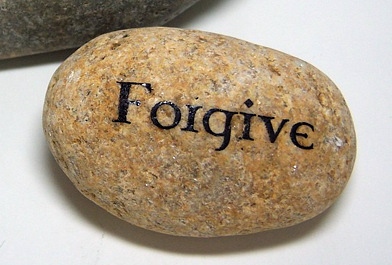
Forgiveness: The Road to Happiness—or at Least Peace

I look forward to answering your questions in this blog. Please feel free to leave a comment or e-mail your questions to tr***@***********ga.com.


A Whole Life Yoga student asks: I’m in the middle of an ongoing conflict with a member of my family, and although I don’t usually feel angry, I don’t feel happy, either. Do you have any suggestions?

I need to make a confession: this question has challenged me.  The yoga teachings talk about happiness, but not in the way that we might hope.  In fact, the teachings warn against seeking happiness, because within happiness lies suffering.  Instead they advise us to seek peace.

I’ll admit that I struggle with that, even though I get the point.  Happiness leads to attachment; attachment leads to suffering.  Peace, on the other hand, leads to acceptance, and acceptance reduces suffering.

So honestly, I don’t have any great yoga tools for creating happiness. But yoga has helped me find it, nonetheless.  When I practice yoga, I find peace. When I’m more peaceful, I’m happier. So perhaps a more meaningful goal is to turn anger into forgiveness, so that you too can find peace.

The Buddhist meditation below can help jump start that process.  In it, you offer healing to yourself, someone you love, someone with whom you are in conflict, and finally the world.

If sending healing to your family member is too challenging right now, start with someone less charged, like a rude grocery store clerk or someone who cuts you off on the freeway. Over time, as you forgive and find inner tranquility, happiness may sneak its way back in.

Loving Kindness Meditation:

  1. Come to a comfortable seated or lying position.
  2. Allow your eyes to close, and notice your breath—without intentionally trying to change it.  Bring your attention to the warmth and coolness of the breath at the tip of your nostrils.
  3. When you are ready, bring your own self to mind, complete with all of your strengths, weaknesses, successes, and struggles.  Silently and continuously repeat the following intentions for yourself:
    • May I be at peace. May my heart be open.
    • May I be healed, and may I be a source of healing for all beings.
  4. When you are ready, bring to mind the image of a loved one—someone you care about.  Silently and continuously repeat the following blessings for that person:
    • May you be at peace. May your heart be open.
    • May you be healed, and may you be a source of healing for all beings.
  5. When you are ready, bring to mind the image someone with whom you are in conflict, or someone who “pushes your buttons” in some away.  Perhaps someone who’s injured you in the past whom you’ve not forgiven.  Silently and continuously repeat the following blessings for that person:
    • May you be at peace. May your heart be open.
    • May you be healed, and may you be a source of healing for all beings.
  6. When you are ready, bring to mind an image of the entire planet. Visualize or sense the continents, the oceans, and the shape of the earth as it moves around the sun.  Silently and continuously repeat the following blessings for the earth:
    • May the earth be at peace. May the hearts of the earth be open.
    • May the earth be healed, and may the earth be a source of healing for all beings.
  7. If your attention wanders (and it will!) just notice it, and invite your attention back to the sensation of the breath at the tip of your nose.  Then continue with the loving kindness meditation from wherever you left off.  The “blessings” above can be modified to anything that has meaning for you.

I hope that helps, and thank you for the question!

Namaste

Tracy Weber

My Yoga Journey

This week’s blog entry was written by guest author Katie Burns. Katie is a student in Whole Life Yoga’s teacher training program. She can be contacted at ka**********@***il.com.

Five years ago during my first yoga series , I noticed that my body felt better, and I felt more grounded and focused after I left class. From that first experience with yoga, I knew that I wanted to pursue a long-term relationship with yoga, but being afraid of commitment, I needed to embark on my own journey before coming to the point where I was ready to plunge into a yoga teacher training.

I started seriously thinking about taking a teacher training a little over a year ago. To begin, I researched various teacher training programs from multiple lineages and offered in a plethora of locations. I could move to India for a month to study in Dharamsala or perhaps I would trade in our rainy Northwest winters to spend a handful of weeks in Costa Rica or Mexico at a teacher training retreat center. Then again, I could move back up to Vancouver, BC for a one-month intensive training and study through the school where I used to regularly attend classes. The more I reflected on my options, the more I realized that although those choices were quite appealing, they would not help me to meet one of my personal goals: integrating yoga into my daily life.

Around this time, I came across Whole Life Yoga’s ten-month teacher training. The more that I looked into Viniyoga, the more it seemed like the best fit for me. On a personal level, I liked that the training was spread out over the better part of year so that I would have time to fully absorb and integrate the material, philosophy, and practice. I appreciated that the class meets at least once a week which provides the opportunity to create community with the other participants as well as a designates a weekly time and space for learning about and practicing the different components of yoga. Furthermore, the training schedule allows me to continue working full time while I complete the program. However, most importantly, Viniyoga takes a student-centered focus that meets the differing needs of each individual’s body and situation. Instead of taking a one-size-fits-all approach, Viniyoga is flexible and adaptable. It meets each student where he or she is currently. This tenant of Viniyoga is connected to my personal as well as professional motivation in participating in the Whole Life Yoga teacher training.

Professionally, I work as a mental health case manager with homeless and formerly homeless individuals. After completing the training, I would like to offer yoga to clients at my agency. Further down the road, I would like to integrate mental health counseling with yoga as the body holds so many emotional memories and traumas. I hope to either open a private practice or work at a wellness center and serve clients who are interested in working through these duo modalities. Finally, I would also like to teach yoga classes at a studio in addition to my work in mental health as I believe the physical, emotional, and spiritual benefits of yoga should be accessible to all who are interested. In line with this belief, I would like to offer a by donation class at least once a week so that money is not prohibitive to potential students. While these are my initial goals, I am open to future opportunities that may present themselves.

The journey has already begun for each of us. Your journey may include a teacher training or it may not. Regardless of where it takes you, I encourage you to trust your instinct and follow your passion. As Rumi said, “Let yourself be drawn by the strange pull of what you love. It will not lead you astray.”

Namaste

Katie

Creating Abundance

“Abundance is about being rich, with or without money.”— Suze Orman

Depending on your perspective, the holidays can either be a joyful time shared with family and friends or a dismal demonstration of unrealized expectations. The choice is yours. Abundance is everywhere, if you choose to look for it.

In my annual Yoga of Thanksgiving class this past Thursday, twenty-two students and I reflected on the concept of abundance: what it means to us, how we can create more if it and how we can share it with those around us.

Our practice included over an hour of movement, but that was the least of it; meaningful  practice tugs more at the heart than the hamstrings. Today, I’d like to share some quotes, breath practices, and meditations we explored.

First Quote: “Whatever we are waiting for — peace of mind, contentment, grace, the inner awareness of simple abundance — it will surely come to us, but only when we are ready to receive it with an open and grateful heart.”—Sarah Ban Breathnach

First Breath Practice:

  1. Lengthen your inhale and exhale, making them approximately equal.
  2. Remain at that lengthened breath for several minutes. With each inhale, imagine abundance in all its forms entering your heart. With every exhale, imagine those same qualities flowing through your body and taking root in every cell.
  3. After several minutes, return your breath to a normal rhythm. Carry the energy of this breath practice to meditation.

First Meditation Question: How can I invite abundance into my life, regardless of my material wealth?

Second Quote: “The universe operates through dynamic exchange…giving and receiving are different aspects of the flow of energy in the universe. And in our willingness to give that which we seek, we keep the abundance of the universe circulating in our lives.”— Deepak Chopra

Second Breath Practice:

  1. Lengthen your inhale and exhale, making them approximately equal.
  2. After six breaths at that lengthened breath, add a two second pause after both the inhale and the exhale.
  3. Remain at this breath for several minutes. With each inhale, imagine abundance in all its forms entering your heart. In the pause after inhale, imagine abundance completely filling you. With every exhale, offer abundance back to the world. In the pause after exhale, imagine abundance both within and around you.
  4. After several minutes, release the pauses, but continue breathing with a lengthened inhale and exhale.
  5. After several more breaths, return your breath to a normal rhythm. Carry the energy of this breath practice to meditation.

Second Meditation Question: How can I create abundance in the lives of those around me?

At the end of class, each student chose a string of prosperity hens that was crafted by artisan women in India. Hens symbolize prosperity in Indian culture, because any family fortunate enough to own a hen has a continual source of nourishment. I hope the hens will remind each student to be grateful and generous in the season ahead.

I hope this practice does the same for you.

Namaste

Tracy Weber

Come visit Whole Life Yoga in Seattle, and join me in our special New Year’s Yoga Celebration!

Yoga, Writing, and Persevering Practice

I have spent every spare moment for the last year and a half writing my first yoga mystery, Murder Strikes a Pose. My husband and dog can both attest to my writing obsession, as well as the sacrifices they made so I could pursue it.

I offered my novel to the universe last Tuesday. To be more specific, I e-mailed it to several prospective agents. As I hit the SEND button, I was struck by the parallels between writing and yoga. Both have been inexorable parts of my life this last year. My personal yoga practice kept me balanced and opened my mind to creativity. Teaching yoga kept me grounded in what was truly important. Writing allowed my mind and imagination to fly free.

According to sutra 1.12, yoga helps us overcome the limitations of our minds and the frailties of our conditioning, but only if we commit to it as a “persevering practice.” Persevering practice occurs:

  • Over a long period of time
  • Without interruption
  • With dedication and enthusiasm
  • Without attachment to results.

Easy, right?

If you’re like me, your yoga practice ebbs and flows. Sometimes it’s part of your daily routine; sometimes it falls off the radar for weeks at a time. Sometimes you leap onto your mat with the joy of a child holding a bright green lollipop; other times you drag yourself there like a fifty-year-old en route to her first colonoscopy. And that whole idea of not being attached to the results? Well, good luck with that.

But as usual, the sutras offer wisdom, for both yogis and writers. Put simply, the ancient teachings are right.

Asana done once a month or even once a week gives anemic results, and the benefits of daily practice quickly dissipate when discontinued. Without dedication, yoga practice becomes nothing more than exercise, and not very effective exercise at that. On the other hand, if we hold preconceived attachments to the results of our practice, we simply give up.

Writing offers many parallels. I wrote the first two chapters of my book over three years ago, then let it sit for almost two years. Until I worked on it daily for over a year, I made no progress. And on the days I lacked dedication and enthusiasm, my words were no more than crumpled pages at the bottom of my recycle bin.

As for attachment to results, well, I have to let that go, or I’ll never make it past my first rejection, sure to come any day now. Any writer attached to success lasts about three minutes before laughing maniacally, tossing her computer out the window, and popping popcorn over the manuscript burning in her fireplace.

So why continue? I practice both yoga and writing because word by word, pose by pose, both offer unexpected gifts: flashes of self-understanding, moments of quiet calm, a connection to laughter and joy in this sometimes challenging life. These small gifts make all the rest worth it.

Like many of my students, my yoga and writing practices both wax and wane, and my larger goals often seem unattainable. I’m more likely to become a bestselling author than attain enlightenment in this lifetime, and neither is very darned likely. But the simple act of practicing serves me, nonetheless.

So if you need me, I’ll be teaching at the studio or typing at my keyboard—persevering.

Namaste

Tracy Weber

Come visit Whole Life Yoga in Seattle!

Happy 75th Birthday TKV Desikachar!

Anyone want to go to France in October of 2013?  If so, I have the perfect excuse—TKV Desikachar’s 75th birthday celebration.  For those of you who aren’t familiar with TKV Desikachar, he is the son of T. Krishnamacharya, who was the key lineage bearer of the Viniyoga principles in our lifetimes.

In other words, Desikachar is my teacher’s teacher, and he is in charge of keeping this lineage’s principles alive worldwide, even if they sometimes go by another name. I have learned everything I know about yoga as a direct result of Desikachar’s work with his students, most notably Margaret Pierce (who taught me everything I know about prenatal yoga)  and Gary Kraftsow (who taught me almost everything else.)

I’ve taken some seminars with Desikachar, though I can’t really say I’m his student.  (To me, a person can only say they’ve studied with a teacher if he or she would recognize them standing on the street.) What I can say about this gentle man is that he seems kind, unassuming, humble, and that he has a self-professed love of chocolate and other forms of candy.  😉

In honor of his birthday, I’d like to offer you the opportunity to better know this man by sharing a few things you might not know about Desikachar:

  • He started his professional life as an engineer with little interest in yoga.
  • He has been a yoga teacher using his father’s principles since the 1960’s.
  • He is totally devoted to the teachings of his father, T. Krishnamacharya.
  • He pioneered the use of line drawings (aka stick figures) as a short hand for documenting yoga sequences.
  • He showed how modifications (adaptations) of yoga asanas could help yoga be truly adapted to the needs of the individual.

Desikachar is now working to pass his leadership role on to his son, Kaustub Desikachar, with whom  I hope to take seminars in the future.

The celebration of Desikachar’s 75th birthday in Porte Leucate, France, will include lecture, asana, pranayama, chant, and meditation in both English and French.  I won’t be able to attend, but I hope some of you can, and if so, please bring me back lots of photos! To learn more, check out this web site.

Namaste

Tracy Weber

Come visit Whole Life Yoga in Seattle!

Belly Breathing for Stress and Pain Relief

This simple, relaxing breath can be used any time you want to soothe body, mind, and spirit. I taught it recently in my Yoga for Chronic Pain class, yet it reduces stress of any kind—physical, emotional, or spiritual.

Belly Breathing

  1. Lie on the floor, in bed, or any place else you can be comfortable without falling asleep.  Your knees can be bent or draped over a bolster.  If that’s not comfortable, you can also elevate your shins on a chair.  Any position is fine, as long as it’s physically comfortable and your spine is in a neutral position.
  2. Notice the sensations of your body, without labeling them as “good” or “bad.”  Just be present with those sensations. Surrender your weight into the earth and feel tension drain from your body.
  3. Place your hands on your stomach and consciously breathe as if you were breathing into your belly.  Notice how your belly gently expands with every inhale and relaxes with every exhale. Invite your mind to be in this present moment, not concerned with the past, not worried about the future. Every time your mind wanders, simply bring it back to the feeling of the breath in your belly.
  4. After a minute or two, begin to lengthen your breath. Take several breaths to deepen each inhale and exhale, focusing primarily on a slow, complete exhale. When you find a rhythm that feels deep, yet smooth and easy, continue breathing at that length. If at any point you feel a sense of strain, shorten the breath again until you find a length that feels full, yet relaxing.
  5. Continue breathing this way for approximately five minutes, and then gradually return your breath to a new, uncontrolled rhythm.  Notice the sensations of your body again, still trying not to label them as “good” or “bad.”
  6. When you’re ready to transition back to your day, begin with small movements, such as wiggling your fingers and toes or even yawning and stretching. Then roll to your side for a moment before gradually pressing up to sitting.

This simple practice is one of my favorites for soothing both physical and emotional
discomfort.  I hope you enjoy it!

Namaste

Tracy Weber

Come visit Whole Life Yoga in Seattle!