Author Archives: Tracy Weber

When I Arrive

Today’s post is written by guest writer and graduate of Whole Life Yoga’s 200 hour teacher training program, Amanda Whitworth.   She can be reached at am***************@***il.com.

We spend so much time walking through our lives, room by room, drawing up a list of work to be done, cracks to be patched. For once, to balance the list, we ought to walk through the rooms of our lives… not looking for flaws, but for potential.”- Ellen Goodman

The mind is a very powerful thing. The stories we tell ourselves can be vicious and mean, things we wouldn’t even say to our worst enemy yet we hardly blink an eye when we say them to ourselves. It’s these stories we tell ourselves, whether we heard them first through someone else or devised them on our own, that lead us down a dangerous road.

I often find myself walking through life telling myself so many stories it’s almost hard to believe. I am thirty-one years old after all and I SHOULD be exactly where I expected to be at this age, right? I SHOULD be doing exactly what all my friends are doing, right?

More often than I care to admit I get caught up in what I think I should be doing that I fail to see what I AM doing and all the things I HAVE done in my life. At times I get absorbed in this idea that my glass is half empty that I find it hard to believe that in reality, my glass is more then half full.

The normal tape recorder that plays in my head goes a little like this; ‘I’m not creative enough, I don’t have a career to show for, I’m not a wife or a mom, I don’t have an excellent green thumb, I’m not as good of a writer as I wish I was, and worst yet, I’m not yogi enough.” Seriously, this is the negative tape recorder in which I often find playing in my head with little to no effort on my part. So what is my point you’re probably asking?

Lately I’ve been asking myself why do I, like some many others, get caught up in this idea of ‘when I arrive’ I’ll will be the person I always thought I would be? Why can’t I be the person I want to be right now?

To be honest, I don’t have a definitive answer because I think this is subjective to each individual. What I do know is that a lot of these feelings I have are projections and expectations I’ve placed on myself based off of what I think others think of me. Silly, huh?

So where does yoga fit in to all this mental craziness?

Yoga, for me, is teaching me slowly but surely, to see myself and others a little bit clearer. And although there is still that inevitable tape recorder playing in the back of my head, I mean, thirty-one years is a long cycle of habitual negative self talk to break, a regular yoga practice has provided me with some powerful tools to bring with me in my everyday life. For example, back before I practiced yoga, I was terribly reactive towards people who I felt were judgmental towards my life and the choices I had made. I would get super fired up, defensive, and often begrudge them for even voicing an opinion to begin with. It was a harmful and hurtful cycle for both me and those in my life.

Flash forward to now and I honestly feel that what I have learned through a regular practice of asana, meditation, and breath work combined with my experience from taking the Whole Life Yoga’s teacher training course, I have been given another opportunity to look at life differently.

Every day I work on letting go of this idea of ‘when I arrive’ and try to look at each day as an opportunity to be exactly who I am and know that I am exactly where I am suppose to be. I am me. That’s all I can ever be and what I am doing in my life has no relation to anyone else. As long as I am happy, that’s all that matter.

I think Dr. Seuss says it best, “Today you are YOU, that is truer then true. There is no one alive who is youer then YOU!

I hope that all of us can walk through the rooms of our lives and instead of looking for flaws, truly and with a clear mind see our own intentional!

Amanda

Come visit Whole Life Yoga in Seattle!

Research Shows It! Viniyoga Can Help Heal Your Back!

Finally, a yoga-related news article I’m happy to pass on to you! It seems like yoga has had more than its share of bad press lately—from the New York Times article proclaiming that yoga can “wreck your body” to many recent articles that have been forwarded to me about a famous (non-viniyoga) yoga guru who has recently, shall we say, fallen from grace. 

So I was more than a little pleased when a student approached me in my Yoga for Healthy Backs class recently to say that two of her friends recently forwarded her a positive article about yoga from The Huffington Post.  This article discusses recent research showing what I’ve known for years:  that yoga, specifically viniyoga, can help overcome chronic low back pain.

The research described is the most recent in a pair of studies co-sponsored by the National Institute of Health and Group Health Cooperative.  Both studies used viniyoga—the same style taught at Whole Life Yoga, and the yoga protocols were designed by my teacher, Gary Kraftsow.  One goal of the most recent study was to see if earlier benefits of viniyoga could be replicated with a larger test group.

According to Karen Sherman, one of the study authors, they specifically chose viniyoga, because “we wanted to pick something to test that was likely to be safe and easy for beginners to practice both in classes and at home.”

The results?  Students who participated in weekly 45 – 50 minute viniyoga classes, including deep breathing and guided relaxation, experienced clinically significant improvements in low back pain and dysfunction.  And those improvements were still apparent at least 14 weeks after the end of the study.  Similar benefits were found in students who practiced weekly 52 minute stretching classes with 20 minutes of home stretching on non-class days.  Although the article does not state this, I do believe the yoga students were also given home practices. 

Researchers attribute the improvements to the physical benefits of yoga—specifically, stretching and strengthening, versus any mental benefits. So I guess all the stress reduction and emotional balance we yogis experience is just an awesome side benefit!  😉  (By the way, a recent study on viniyoga for stress reduction also showed great results, but that’s a blog article for a different day).

And on a personal note—the Group Health study specifically looked at chronic low back dysfunction that interfered with participant’s day-to-day activities.  But I can tell you from personal experience, yoga also helps with upper back and neck pain, along with a variety of other physical, physiological, and emotional issues.

If you, or someone you know, suffers from chronic low back pain, consider giving viniyoga a try! If you’re in the Seattle area, please check out Whole Life Yoga’s Yoga for Healthy Backs series.

Namaste

Tracy Weber

Come visit Whole Life Yoga in Seattle!

Yoga, Vegetarianism, and Free Food at Veg Fest!

Whole Life Yoga booth at Vegfest 2004

I became a vegetarian years before I took my first yoga class.  I come from a long line of farmers.  In fact, when my father passed away, he lived in the same house he was born in, which was on the same farm that my great-grandfather started when he immigrated to the United States.  Dad was a dairy farmer; my Uncle Jim raised the beef cattle.  But even though I came from a strong meat-and-potatoes family, I always felt a deep personal connection to animals.  I often said that if I allowed myself to think about it, I wouldn’t be able to eat meat.  In my late 20’s, I thought about it.  😉

People become vegetarian for a variety of reasons: personal health, animal welfare, environmental stewardship, you name it.  For me, it was about compassion.  I just didn’t believe that an animal had to die in order for me to live.

Now where’s the connection to yoga in all of this?

Yogis heatedly debate about yoga and vegetarianism.  Many believe that if you claim to be a yogi, you must also be vegetarian.  Others, of course, disagree.  The word you hear bantered about in these discussions is ahimsa.   According to the Yoga Sutras, yogis must practice ahimsa, or non-harming, in all situations.  For me and people who think like me, ahimsa has to include non-harming to our animal friends.  For others, it’s not that simple.  To be sure, ahimsa has a much broader reach.  We should attempt to act without harm in all situations: to ourselves as well as others, to the planet as well as ourselves.

In all honesty, I don’t have the answer.  My own food choices are judged harshly by others.  I’m vegetarian, not vegan, meaning I eat limited amounts of cheese.  My dog and cats aren’t vegetarian, meaning some animal dies for them to live.  And my husband isn’t vegetarian—but I’m rather fond of him nonetheless.

In the end, each of us lives by our own values.  Whether or not we choose to eat meat, we would all benefit by embodying greater kindness and compassion.  Perhaps even more importantly, we should all learn to live by our own values without judging others for theirs.

Now, on to the free food part of this blog entry.

I’m proud to support Vegetarians of Washington. They promote vegetarianism in a very “ahimsic” way.  They don’t judge, they entice.  As my friend and founder of the organization often says, “we tempt you through your taste buds.”

On March 24 and 25 (this weekend) they are hosting Veg Fest at Seattle Center, and Whole Life Yoga will be there!  Whole Life Yoga teachers and students will be on hand to talk about our classes, answer questions, and give out free passes to students who haven’t tried the studio yet.  And anyone who joins Vegetarians of WA at the festival gets a gift certificate for one free drop-in yoga class!

While you’re there, you can taste hundreds of free samples of delicious, primarily vegan food.  The vegan ice cream alone is worth it!

I hope many of you stop by and see us.  Bring your friends and come hungry.  And take a moment this week to reflect on your definition of ahimsa, regardless of what you eat.

Namaste

Tracy

Come visit Whole Life Yoga in Seattle!

Sitting Pretty—and Comfortably—in Yoga Class

Whenever I see students struggling to sit comfortably in yoga class, I’m reminded of that old Alanis Morissette song—isn’t it ironic that we come to yoga class to decrease pain, then sit uncomfortably on the floor with our backs screaming in agony.

Sitting is notoriously painful for people with back pain; sitting on the floor, crossed legged, without back support, is even worse.  Of course, that’s what most of us tend to do in every yoga class.  There are many better alternatives. A few of my favorites are below.

First, if you do choose to sit cross-legged, look down at your knees.  If your knees are above your hips, then your spine is not in neutral alignment, which will lead to back discomfort.  This problem can easily be fixed by elevating your hips.  Fold a blanket or two and place them under your sitz bones (or ischial tuberosities, for you anatomy geeks.) These are the bony prominences between the tops of your thighs and the bottoms of your hips.  Add blankets until your knees are below your hips, as in the photo below.

For people without knee issues, the sitting posture below is my favorite.  This is how I sit when I teach.  In the first photo, the student is sitting on a block, which elevates her hips to put less pressure on her knees.  In the second, she is sitting on a meditation bench.  My favorite benches are sold at East West Bookshop.  They can be a little pricey, but they last forever.  I’ve had the one in the photo for over 11 years.

We have plenty of blocks and blankets at the studio, and we also have four meditation benches.  So feel free to experiment and find what is most comfortable for you.

Finally, you can always lie down.  There’s nothing magic at all about achieving that perfect lotus pose.  Our goal is to connect the body, breath, and mind. To do that, the spine should be neutral. A neutral spine can be found sitting, kneeling, lying, or standing for that matter. While it’s true that the breath is subtly blocked in a lying position, for most people the effect is minor. If lying gets you out of pain, I say go for it!

Generally, the most neutral supine position lying with the knees bent, feet on the floor, as in the photo below.

The biggest risk in this position is falling asleep.  So try to keep your mind alert, and if you come with a friend, tell them to nudge you if you start snoring!

I look forward to seeing you at the studio soon!

Namaste

Tracy

Come visit Whole Life Yoga in Seattle!

Finding Your Teaching Voice–Response to a Student Question

I look forward to answering your questions in this blog.  Please feel free to leave a comment or e-mail your questions to tr***@***********ga.com.

A student and yoga teacher asks:  I teach yoga at a health club, and I was recently given feedback by my supervisor.  She recommended that I “add a higher element of fun and joy” to my yoga classes, and said that I need to be more “light and bubbly” like the other instructors. Any thoughts on this? What should I do?

This is a tough one. The trick is integrating the feedback without compromising who you are as a teacher. Each venue you teach at will have its own style and energy.  Teaching at a health club is not the same as teaching at a yoga studio.  Teaching at a studio is different than teaching at a mindfulness center, and so on. 

Students also appreciate different styles in yoga instructors. Some like calmer, more introverted teachers, while others prefer ones that are more energetic and extroverted. It can be tempting to try to match people’s expectations—to morph yourself into a chameleon-like being that blends into her environment but is never herself.   You have your own unique personality and character—your own voice, if you will. It is critically important that you remain authentic in your teaching.  In other words, don’t try to be someone or something you are not.  If you do, you will come across as fake and your students won’t like that either. So, the trick is finding a venue and audience that matches your teaching style, while continuing to enhance and build that style.

That said, I do think many yoga teachers are too langhana, meaning they tend to speak softly and in low tones, with a meditative kind of energy.  This is great if you work in a mindfulness center—not so great in a fitness center.   And if you are on the shy side, you may back away from interacting with students, which may be part of the problem.  Here are some things I would recommend trying.

  • Connect with your students before and after class.  I’m notoriously bad at this, but try to get to know your students’ names.  Certainly get to know them as individuals.  And check in with people after class to see how the experience was for them. This is especially important with newer students, who may have questions but not feel comfortable approaching you.
  • Continue this connection during class.  Try to have a personal moment with every student at least once during class.  This can be challenging in larger classes, but is a worthy goal nonetheless.  This connection can range from eye contact and a smile to working on the finer points of form.  Of course, there’s a balance here.  You have to intervene enough to make sure the student knows you’re present, but not so much she wishes you weren’t.  😉  You’ll learn that balance over time.
  • Smile. A lot. Your voice and presence transform dramatically when you smile.  Most of us tend to take ourselves, and our classes, way too seriously. Plus, if you smile, your students are likely to smile back. Smiling students are less likely to strain and struggle in challenging poses. 
  • Use your full vocal range.  Yoga teachers tend to speak softly and in a monotone.  This works well if you’re guiding your students toward meditation or trying to lull them to sleep.  It doesn’t work will for fitness-oriented classes or classes in which you’re trying to build energy.  Vary your vocal volume and pitch to match the energy you are trying to create. 
  • Be present for the entire room.  Way too many teachers teach from the front of the room only.  Move throughout the class; instruct poses from different sides of the room; stand near the back as well as the front.  This will make you a more vibrant presence for the entire class, regardless of where students have placed their mats. 
  • Remain committed to your personal practice.  Many, many teachers become stale and teach by rote simply because they aren’t practicing yoga themselves.  To teach yoga, you have to practice yoga.  If you’re not consistently practicing, start again.  Take classes from teachers you find inspirational, and continue your practice at home.
  • Know when to say when.  Not every teacher is a fit for every class or venue.  If you feel like you can’t teach from an authentic place, then that venue may not be right for you.  In other words, sometimes the best choice is to walk away.

I hope that helps!

Namaste

Tracy

More information about Whole Life Yoga’s teacher training program can be found at our web site:  Yoga Teacher Training at Whole Life Yoga.

Ten Yoga Teacher Trainings and Counting: The Eleventh Starts in October!

Our First Teacher Training Graduation in 2004

When I opened Whole Life Yoga, I never intended to offer a yoga teacher training.  In fact, it was the farthest thing from my mind. I was already beyond busy teaching classes and private sessions, managing the studio, and working my non-yoga consulting job to pay the bills.  I blame Rene.  Those of you who don’t know Rene are missing out.  He’s a kind spirit, wonderful man, awesome yoga teacher, and now Whole Life Yoga employee.  (See him in Yoga for Men and his drop-in yoga class on Tuesdays!)

Anyway, Rene and I met for coffee one day about nine years ago.  He told me that he wanted to learn how to teach yoga.  I assured him that I thought it was a fantastic idea.  Then came the kicker.  He said he wanted to study with me!  I can’t remember what I said anymore, but it was likely something eloquent like “huh?” Dumbfounded, I left the meeting, the seed planted.  Shortly after, I went on vacation.  A “yoga cruise” of all things.  I remember relaxing in a deck chair on last day of the cruise.  For whatever reason, I had the epiphany.  “I can do this!”  I pulled out a sheet of paper and started designing the training.

It took longer than that day on the deck.  Over the next few months, I added a new task to my to-do list.  I began developing the nine-month curriculum and applied for certification from Yoga Alliance.  Ever the multi-tasker, I developed my advertising plan while leading a career mentoring seminar in Ireland.  I fervently hoped I’d get some students.  I had Rene, of course, but would anyone else sign up?  I hoped to get six students who would meet at my house.  In the end, Yoga Alliance certified my program, twenty students registered, and I moved the training to the Phinney Neighborhood Association, where it’s been ever since.

The first year wasn’t without bumps, but we had a great time and learned a ton. Since then, I’ve offered nine 200-hour trainings and added a 500-hour one.  We’ve certified over 160 people, with 23 more in the program now.

I can honestly say that teaching this program is the most rewarding thing I have ever done.  Leading a group of people through this process of transformation is simultaneously enriching, challenging, frustrating and sometimes heartbreaking.  It’s telling that the training now takes place over 10 months—the same amount of time it takes to gestate a child.  We see each other through births, deaths, marriages and divorces.  And growth—lots and lots of growth.  We learn about yoga postures, of course, but that’s the least of it.  By studying yoga and yoga philosophy, we learn about ourselves and grow in ways so much more profound than the physical.

As I now plan for my 11th training, I hope that some of you will join us.  Our students are varied.  I’ve had students in their teens and in their mid 70’s.  Students who are physically fit and healthy, and students with injury and debilitating illness.  Students who are pregnant.  Students who are brand new to yoga and, students who have been yoga teachers for over a decade.  Students who never intend to teach, and students who plan to open yoga studios.  All are welcome.  All add to the diversity and richness of our experience.

I hope some of you will join us in October.  And be sure to thank Rene for starting me and so many others on this journey!

Namaste

Tracy

More information about Whole Life Yoga’s teacher training program can be found at our web site:  Yoga Teacher Training at Whole Life Yoga.

New Viniyoga Videos for Anxiety and Depression

Like many viniyoga teachers, I’m not a huge fan of yoga videos, as the video format doesn’t allow for the customization and adaptation to the individual that is such a hallmark of this rich lineage.  Still, as much as I’d like everyone to experience yoga first hand at Whole Life Yoga or work with me privately, I know that for many students, videos provide a much more convenient and accessible connection to a consistent yoga practice.  Who knows…maybe someday I’ll even create a video of my own!  😉

Until then, two new viniyoga videos have recently been released by my teacher, Gary Kraftsow, on topics that are personally important to me:  Yoga for Anxiety and Yoga for Depression. I’ve suffered from both conditions off and on throughout my life, and yoga has been an incredible powerful tool in helping me manage my symptoms. I may have come to yoga to overcome back pain, but by far the first and most important thing to heal was my heart.

Gary’s new products introduce the viniyoga therapy approach to anxiety and depression.  They are a bit different than typical videos, in that he provides cognitive learning in addition to yoga practice.  Each video contains approximately an hour of lecture on yoga therapy and its applications for anxiety and depression, along with two practices: one that is a bit over thirty minutes and one that is closer to an hour.  Even more unusual, the practices aren’t just asana, or movement.  They contain multiple facets of the rich and dynamic viniyoga lineage:  Asana (movement), Pranayama (breath work), Meditation, and Chanting.

I sell both of these at the studio, along with a few other viniyoga videos.  But they can also be purchased at amazon.com and via other on line sellers.  Of course, I’d much rather see your bright shining faces at the studio, but these videos may provide a nice addition to your collection and to your practice.  Let me know what you think!

Namaste

Tracy Weber

Come visit Whole Life Yoga in Seattle!

A New Perspective, a New Yoga

This week’s blog entry was written by guest author Jacqui Trent. Jackqui is a current student  of Whole Life Yoga’s teacher training program.  She  can be contacted at ja*********@***il.com.

Like so many people in America, I was drawn to yoga as the next big workout craze.  Boasting arms like Jennifer Aniston and abs like Madonna, yoga promised a “hot bod” – something very appealing to a twenty one year old with a poor body image. So for the next couple of years I took classes on and off at my gym.

I enjoyed it, but I wasn’t getting enough out of it.  Going only when I felt like it, i.e. when I was feeling really “fat”, I didn’t have a strong practice.  The teachers at the gym were good teachers, but they were restricted.  They couldn’t teach pranayama, bandhas, or anything related to yoga that wasn’t a pose.

And then my husband lost his job.  The next two years were really tough.  Things were tight and the stress really ate away at me.  Going against what everyone I knew told me, I took on the stress of two jobs.  Working twelve hour days baking and cleaning houses. It was draining and the extra income wasn’t easing my stress level like I had expected.  Finally the stress was eating away at me and I knew I had to do something. A we search led me to a local yoga studio that offered two months of unlimited yoga for the price of one.

Almost immediately after my first week I was hooked.  My body took to the practice right away and I loved how much better I felt. Leaving my stress at the door and just focusing on me for that hour was amazing!  I was taking most of my classes from the studio owner; she became my favorite. I loved her classes.

I had been with the studio for a few months, when my instructor announced that she would be conducting her first teacher training program starting in January.  Recently I had been considering teaching yoga and was thrilled to get the chance to learn from her.

However, shortly after the program started I wasn’t as excited.  Let’s just say that the training was supposed to last fifteen months and we didn’t even make it half way.  For many reasons it became a toxic environment and we finally had to dissolve the program. We kept telling each other it was going to get better, but in reality it was only getting worse.

I found out about the viniyoga training through one of the amazing woman with whom I bonded with during this experience. She had found out about Tracy and Whole Life Yoga and had joined her upcoming training program. It started in two weeks and encouraged us to contact her.

At first I didn’t know if I was ready. I was so shaken from my last experience that my practice had suffered. I’ll admit I knew nothing of viniyoga, and didn’t know if I should join a program that was foreign to me. After I heard about its therapeutic qualities, I wondered if this wasn’t exactly what I needed.

I still have a lot to learn about viniyoga. This lineage is so different from any style I’d ever tried. My prior knowledge was more focused on form and adjustments. Sometimes the benefits would become compromised when you’re trying to achieve the perfect form, not paying attention to what’s going on in the body.  I really appreciate the fact that there is much more of an emphasis on the benefits of a pose, not making it perfect.

The pace is different from what I’m used to as well. People, including myself, seem to be caught up in the newest yoga fad of a fast paced flow.  But I like that this style seems to be more mindful and intentional. I can’t see myself completely abandoning flow practice, but I do see how others, myself included, can benefit from a viniyoga practice.

The opportunity to study viniyoga came to me at a time when my own practice was broken.  Just like it is used to rehabilitate someone with problems with their back, sacrum or hip, it’s become my tapas and reignited my practice.

Jacqui

More information about Whole Life Yoga’s teacher training program can be found at our web site:  Yoga Teacher Training at Whole Life Yoga.

Yoga Teachings on Anxiety–A Teacher’s Personal Application

“I have been through some terrible things in my life, some of which actually happened.” Mark Twain

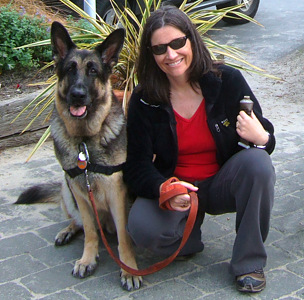
At the risk of annoying some of my readers, today’s blog is personal. As many of you know, I adore my dog. Not the normal, socially acceptable kind of affection most people feel for their pets. Not even the deep love I’ve felt for the dozens of animals I’ve shared my life with in the past. My love for Tasha is inherently, insanely deeper than that. I have found in her a relationship of loyalty and unconditional love that astounds me every day. I’ve never been happier in my life than I have been since the day my husband and I adopted her.

One of the more controversial teachings of yoga is that we should beware of great joy, for buried in the midst of great joy is great suffering. Instead, the teachings say, we should seek peace. In other words, beware of great attachments, because inevitably they come at a price. Although none of us know the future, I have a pretty good idea what the price of loving Tasha will be. After all, her expected lifespan is significantly shorter than mine. Yet still I delude myself, live in the moment, and ignore the future.

When I found a swelling in her breast last Friday, I was concerned but not panicked. When the vet said we should do a biopsy, I was concerned, but not panicked. When the biopsy came back as “inconclusive,” well, that was the final straw. I panicked.

You see, I have a history of anxiety. Yoga helps me keep it under control, but evidently I still have work to do. And we anxiety sufferers know that the nothing feeds our inner demon  more effectively than the unknown.

According to the Yoga Sutras of Patanjali, the purpose of yoga is to decrease the exact sort of suffering I feel now by gaining control over the minds five random activities, or vrttis. Sutras 1.5 – 1.11 outline the mind’s five activities.

  • Correct perception
  • Misperception
  • Memory
  • Imagination
  • Deep dreamless sleep

People who suffer from anxiety are often overwhelmed by three of the above.

  • Misperception. Seeing things not as they are, but “colored” in some way. For me in this moment, I see the word “inconclusive” as evil. In reality, it means we don’t know. It is by definition, neither good nor bad.
  • Memory. Particularly as it relates to similar, unpleasant things that have happened in the past. In this case, I remember my favorite cat. He died on the table during a routine teeth cleaning. No surgical procedure really feels low risk when I remember that.
  • Imagination. Those of us with anxiety are masters at imagining the worst, or as Albert Ellis called it “awfulizing.” The future my crazed mind has come up with would be laughable if it weren’t so real to me.

So how do the teachings help me and others like me? Well first, the sutras are very clear. One activity of the mind predominates most of our psyches: Error. And the teachings of psychology show us that in the absence of information, the mind creates a story that is worse than reality about 90% of the time. So no matter what horror story I create in my mind, I can rest assured that I’m probably wrong, and that whatever I’m imagining is worse than reality. I find comfort in that.

Second, yoga gives us specific practices to combat the hold the mind has over us. I’ve written about two specific practices in prior blogs that are useful in cases of anxiety:

So, I will continue to spend time in my practice, and I hope each of you will as well. Yoga’s biggest gift to us has so little to do with our bodies. Its biggest gift is increased inner peace.

Time for me to practice what I preach.

Namaste.

Tracy

PS–And truly coincidentally, I’m teaching a yoga class for anxiety soon. Check it out at http://www.wholelifeyoga.com/anxiety.html

A follow up several days later.

The yoga teachings were right again.  My mind was in error.  “Inconclusive” may have meant we didn’t know, but now we do.  The follow-up appointment with the vet this morning showed no cancer.  😉 Guess I get to keep my attachment to this lovely beast awhile longer.

My Hips Story

This week’s blog entry was written by guest author Sheryl Stich. Sheryl is a graduate of Whole Life Yoga’s 500 hour teacher training program and an instructor at Whole Life Yoga. She can be contacted at sh****@************gs.com.

Our bodies are made up of a complex matrix of muscles, bones, organs, energy, nerves and emotions. Our hips are centrally located and intricately connected with the rest of the body. Because of theses interconnections, it can sometimes be a challenge to determine where pain originates. We can even have problems in one area of the body, but we experience the discomfort in another area of the body, called referred pain.

When I was 22 I started to have pain in my right low back, which traveled down to my knee and foot. The doctors thought I had tense muscles in my back and gluts and gave me exercises to help relieve the tightness. After 17 years of unrelenting pain, and working with various doctors and therapists, my primary care physician sent me for an x-ray of my hip joint. There it was, plain as day – the cartilage was almost non-existent, which was causing the pain in my back, and referring pain down my leg. The doctor said the only way to fix it was to have a total hip replacement. I said, “This pain can be fixed? Sign me up!” I had no injuries or other things that might cause the cartilage to erode. Many of my family members had hip replacements, so my problem was probably genetic. The surgery was highly successful. Afterwards the pain was virtually gone! Amazing – what was thought to be back pain was actually being caused by my hip joint.

Several years later, terrible pain suddenly started shooting from my other hip joint down the front of my leg. I was certain something had happened to that hip joint, so I went immediately to my orthopedic surgeon. When I described the location of the pain, he told me it was a disc in my back, not my hip joint. “Funny, I thought, this time I think it’s my hip, and it’s actually my back.” I had surgery to trim the bulging disc, which immediately relieved the pain, but left me feeling a need to do something to help preserve my joints and hopefully stave off future surgeries.

I decided to start practicing yoga. As I was walking down Greenwood Avenue one day I noticed Whole Life Yoga and met Tracy Weber as she was opening the front door. I told her about my back and hip surgeries, and asked if this would be a good yoga for me? The answer was a resounding “yes!” She explained the benefits of Viniyoga to me, and I started taking classes that week.

After a few years of yoga practice, I took the Whole Life Yoga basic, and then advanced teacher training programs. As I was designing a hips practice for myself for the training, it occurred to me that others might also benefit from the practice, so I developed Yoga for Happy Hips class. In this past year I have had a hip revision surgery on my right side to replace the worn out synthetic cartilage from my 16-year old original hip replacement (when it was first replaced, the estimated life span was ten years). I believe my yoga practice helped me to lengthen the life of the joint by keeping the muscles around my hip joint strong and flexible. My left hip joint has lost a significant amount of cartilage over the years, so I practice to keep that hip strong and flexible too.

Through yoga, I have learned to listen to my body. When I have pain, yoga helps me not only physically, but helps me remain more calm and relaxed which helps reduce stress and discomfort. I truly enjoy helping my students by sharing my knowledge and experience with them, whether it’s tight muscles, stress, injuries or the myriad of other challenges that can cause hip discomfort.

Sheryl

Come visit Whole Life Yoga in Seattle!